Beekeeping Gear
Varroa Mite Sticky Board - 8 & 10 Frame Mite Monitor
Varroa Mite Sticky Board - 8 & 10 Frame Mite Monitor
Couldn't load pickup availability
See your mite drop without pulling a single frame
Varroa changed the maths for every beekeeper in the country. The question stopped being whether mites will turn up and became how many you are carrying, and when. You cannot make a sensible treatment decision without a number, and pulling the brood nest apart every few weeks to guess at one is hard on the bees and slow going for you.
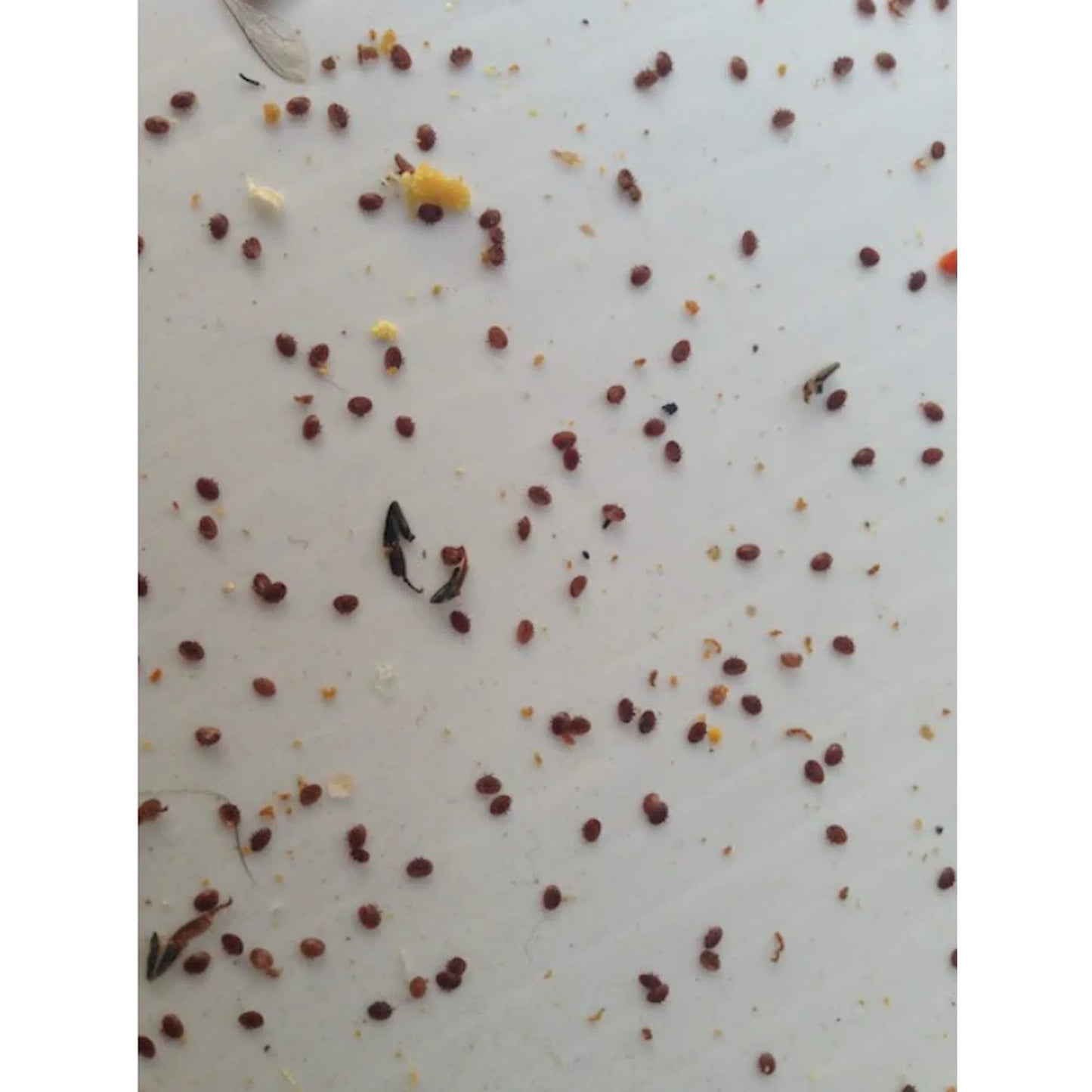
A sticky board is the simplest way to get that number. It is a flat adhesive sheet that catches varroa mites as they drop off the bees and fall to the hive floor. You leave it in, come back, and count what landed.
How a sticky board reads your hive
Mites do not stay put. A certain number lose their grip through the day, often after a grooming bee has worked them loose, and they fall. Without anything to catch them, some climb straight back up. The adhesive ends that. Whatever lands stays where it is, which gives you a true picture of the natural mite drop inside the colony. Leave the board in for 48 hours, pull it out, and count what is stuck to the surface. That number is your starting point for everything that comes next.
With or without a mesh bottom board
If your hive has a mesh bottom board with a pest tray, simply cut the sticky board to size and slide it into the tray. The mesh keeps bees off the glue while mites fall through onto it. OZ ARMOUR painted hives are built this way, with a wax-dipped mesh bottom board and removable tray. If your hive has a solid floor, you can still use the sticky board, but you’ll need to place a screen over it so bees do not contact the adhesive.
Please note: the mesh bottom board is not included. This product is the sticky board only.
Why a sticky board on its own undercounts
A natural mite drop count has limits. Only a small share of mites fall on their own, usually around 5–30% during the monitoring period, so a passive sticky board will often read lower than the real mite load. It is useful for spotting early signs of a problem, but not ideal for making serious treatment decisions on its own. For a more accurate result, pair the sticky board with a short 48-hour treatment that encourages mites to drop. Then count the mites on the board for a clearer picture of the true infestation level.
Non-invasive, with no bees lost
Some mite tests cost you bees. This one does not. Nothing gets washed or rolled to reach a count, and you are not pulling frames apart to do it. Slide the board in, leave the colony to carry on, and come back. That makes it easy to check often, which is really the point of monitoring at all. Mite loads climb quickly through late summer and autumn, and a board you read every couple of weeks will tell you more than one big inspection a season ever could.
What is a Varroa mite sticky board used for?
A Varroa mite sticky board is used to monitor mite drop inside a beehive. As mites fall from bees onto the hive floor, the adhesive surface catches them so they cannot climb back into the colony. After a set monitoring period, usually 48 hours, the beekeeper removes the board and counts the mites to estimate mite pressure.
Does a sticky board kill bees?
No, when used correctly, a sticky board does not kill bees. In a hive with a mesh bottom board and pest tray, the mesh keeps bees away from the adhesive while mites fall through onto the board. If the hive has a solid bottom board, a screen should be placed over the sticky board so bees cannot touch the glue.
How long should I leave a Varroa sticky board in the hive?
For routine monitoring, 48 hours is a practical period. This gives enough time to catch a meaningful sample of natural mite drop without leaving the board in so long that debris, wax, ants, or hive trash make counting difficult. For more serious checks, the board may be paired with a short treatment that encourages mites to drop.
Can I use this sticky board without a mesh bottom board?
Yes, but it must be protected with a screen. If your hive has a solid floor, do not place the sticky board where bees can walk on the adhesive. Put a suitable mesh or screen above the board so mites can fall through while bees stay clear of the glue.
Is the mesh bottom board included with this product?
No. This product is the sticky board only. The mesh bottom board is not included. If your hive already has a mesh bottom board with a removable pest tray, the sticky board can be cut to size and placed in the tray.
Why does a natural mite drop count sometimes undercount Varroa?
A passive sticky board only measures mites that fall naturally during the monitoring period. Many mites remain attached to adult bees or hidden inside capped brood cells, so natural mite drop can read lower than the true infestation level. This makes sticky boards useful for regular surveillance, but they should not be treated as the only measure when making major treatment decisions.
How can I get a more accurate mite count with a sticky board?
For a clearer result, use the sticky board with a short 48-hour treatment or mite-drop method that encourages more mites to fall. The board then catches the dislodged mites, giving a better indication of the hive’s mite load than natural drop alone.
How often should I check for Varroa mites with a sticky board?
During high-risk periods, especially late summer and autumn, checking every couple of weeks can help reveal whether mite numbers are rising. Regular checks are more useful than one occasional inspection because Varroa populations can increase quickly.
Is a sticky board better than an alcohol wash or sugar roll?
A sticky board is less invasive because it does not require sacrificing or handling a sample of bees. Alcohol washes and sugar rolls can provide useful mite estimates, but they involve collecting bees from frames. Sticky boards are easier for frequent monitoring, especially when you want to avoid disturbing the brood nest.
What should I do after counting mites on the sticky board?
Use the mite count as a guide to your next inspection or treatment decision. A low count may suggest continued monitoring, while a rising or high count may indicate the need for further testing or treatment. The key is to compare counts over time, because the trend often tells you more than a single reading.