Beekeeping Gear
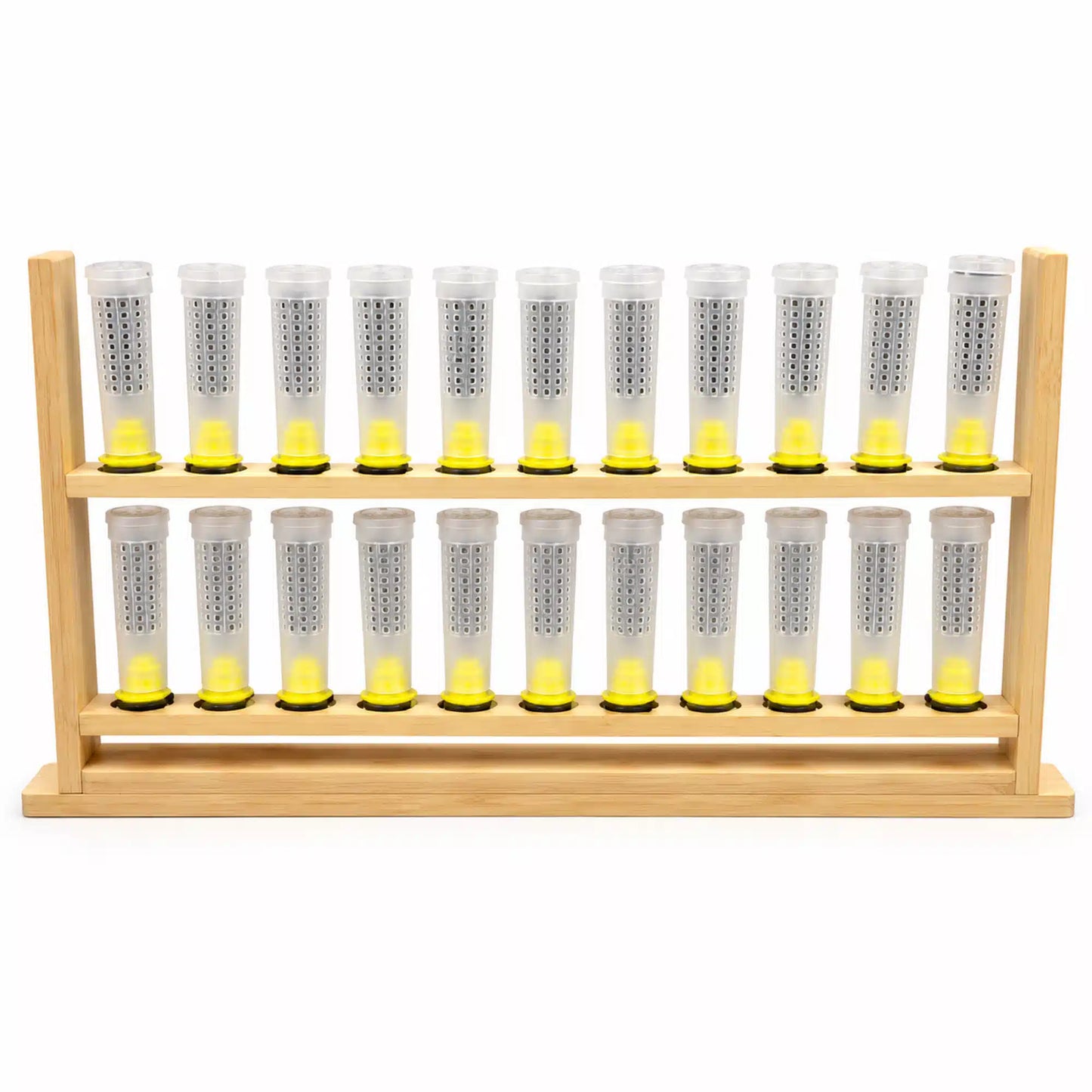
Queen Rearing Frame With Roller Cages - Cell Bar ( unassembled )
Queen Rearing Frame With Roller Cages - Cell Bar ( unassembled )
Couldn't load pickup availability
Stop one early virgin from destroying a whole batch of queen cells
The Queen Rearing Frame with Roller Cages protects your entire batch of queen cells through emergence, so every virgin hatches safely without destroying her sisters.
When you graft a batch of queen cells, they all come ripe within a day of each other, and that is where the trouble starts. The first virgin to chew her way out goes straight looking for her sisters and stings them through the cell wall before they get the chance to hatch. Left alone in the cell builder, one early queen can tear down a whole batch in an afternoon. This frame is how you stop that happening.
It is a standard-size frame fitted with roller cages, the little barred cages that sit over a sealed queen cell. You cage each ripe cell a day or two before it is due to emerge, and the virgin then hatches into her own cage instead of out into the colony. Workers still feed her through the bars and her scent still spreads through the hive, but she cannot reach her sisters and they cannot reach her. It fits a normal hive, holds a row of cells at once.
Why caging the cells matters
A capped queen cell is the most valuable and most fragile thing in the hive at that point. You have put days of grafting, feeding and careful timing into it, and a single uncaged virgin can undo the lot in minutes. The roller cages turn that race into a non-event. Every queen emerges into her own space, none of them get stung in the cell, and you finish the round with a frame of live virgins rather than one survivor standing over a row of torn-down cells.
How you use it
Cage the cells once they are capped and starting to harden, around day ten after grafting, before any of them are due to hatch. From there you can leave the frame in the cell builder or move it across to an incubator, whichever way you work. A drop of honey in the bottom of each cage gives the new virgin something to eat the moment she is out, which buys you a day or two to get your mating nucs ready. Just do not leave her caged much longer than that, since a virgin needs to be in a colony to be looked after properly.
Who it is for
This is a tool for Australian beekeepers who have moved past walk-away splits and are grafting or raising cells on purpose. If you are still buying mated queens or letting a hive raise its own, you do not need it yet. But the moment you are raising more than one or two queens at a time, protecting the batch through emergence is the difference between a good round and a wasted one.
Specifications
- Type: queen rearing cell frame fitted with roller cages
- Size: standard frame, fits most Langstroth hives
- Roller cages: barred cages that sit over each sealed queen cell
- Use: protecting and collecting emerging virgin queens
- Includes: complete frame with integrated roller cages
How do roller cages protect queen cells during emergence?
Roller cages sit over each sealed queen cell so the virgin hatches into her own individual cage instead of out into the colony. Workers feed her through the bars and her scent spreads through the hive, but she cannot reach her sisters and sting them through the cell wall before they hatch.
When should I cage queen cells on a queen rearing frame?
Cage each cell once it is capped and the cell wall is starting to harden, around day ten after grafting. This is before any of them are due to hatch. Caging too early risks damaging the developing queen, and caging too late risks losing cells to the first virgin that emerges ahead of schedule.
How long can a virgin queen stay in a roller cage?
Do not leave a virgin queen caged for more than a day or two after she hatches. A newly emerged virgin needs to be transferred into a mating nuc or colony as soon as possible to be properly looked after by workers. A small drop of honey in the cage gives her nutrition immediately after hatching while you prepare her destination.
Does a queen rearing frame with roller cages fit a standard Langstroth hive?
Yes. This queen rearing frame is standard size and fits most Langstroth hives used by Australian beekeepers. It can be used directly in a cell builder colony or transferred to an incubator depending on how you manage your queen rearing operation. No modification to your existing hive equipment is required.
What is the difference between a cell bar frame and a roller cage frame?
A cell bar frame holds grafted queen cells during the cell building stage. A roller cage frame is used at the emergence stage, with individual barred cages that sit over each ripe capped cell to protect the virgins as they hatch. The two are used at different points in the queen rearing process and work together in a complete system.
Who needs a queen rearing frame with roller cages?
This frame is for Australian beekeepers who are actively grafting or raising queen cells on purpose and producing more than one or two queens at a time. If you are still buying mated queens or letting a hive raise its own emergency queens, you do not need it yet. It becomes essential the moment protecting a full batch of cells matters to your operation.
Can I use roller cages without a dedicated queen rearing frame?
Roller cages are designed to sit over sealed queen cells on a frame in the cell builder or incubator. While some beekeepers improvise with standard frames, a dedicated queen rearing frame fitted with integrated roller cages makes the process faster and more reliable, especially when managing multiple cells at once during a busy Australian spring or summer queen rearing season.
What should I feed a virgin queen inside a roller cage?
Place a small drop of honey in the bottom of each roller cage before the cell hatches. This gives the newly emerged virgin something to eat immediately while she waits to be transferred into a mating nuc or colony. Do not leave her caged without food or for longer than a day or two after hatching.