Beekeeping Gear
Bloodwood Honey 500g | ACO Certified Organic
Bloodwood Honey 500g | ACO Certified Organic
Couldn't load pickup availability
A Rare Australian Honey Worth Trying
Most people have never tasted Bloodwood honey. It's genuinely rare, the Red Bloodwood trees it comes from flower only every two to four years, so there's never much of it, and what exists gets noticed quickly by serious honey buyers. If you've wondered whether honey can taste like more than sweet, this is worth trying.
This 500g jar of ACO Certified Organic Bloodwood Honey is raw, unfiltered, small batch, from native Red Bloodwood trees (Corymbia gummifera) in Australia. The flavour is deep and layered, golden syrup, toasted caramel, and a subtle woody finish that lingers, standing apart from standard supermarket honey.
What Makes It Different
Monofloral honeys come from bees foraging predominantly on a single flower species, giving a flavour blended honey can't match. Red Bloodwood trees are native to coastal eastern Australia, and their nectar produces honey noticeably darker and more complex than most Australian varieties. The two to four year flowering cycle limits how much exists at any time, making it small batch by necessity.
The Flavour: What to Expect
Bloodwood honey is dark amber and thick in the way a well bodied honey should be. It opens with golden syrup and settles into toasted caramel that's neither cloying nor harsh, with a subtle woody, slightly smoky finish uniquely its own. It suits bold pairings: strong cheese, sourdough, porridge, Greek yoghurt, and works well in cooking and baking.
ACO Certified Organic: What That Means
ACO (Australian Certified Organic) is the most recognised organic certification standard in Australia. To carry it, honey must be produced under verified organic standards: hives away from conventional agriculture, no prohibited treatments, and a full audit trail through production. It's not a self applied label, it requires ongoing third party verification. This product is certified under ACO Certification Number: 10360.
Raw and Unfiltered: Why It Matters
Commercial honey is often heated and fine filtered, extending shelf life and easing handling at scale, but removing what makes raw honey distinctive: natural enzymes, pollen trace and flavour complexity that develops in the comb. This honey comes out of the extractor into the jar without heat treatment that flattens flavour and strips natural properties.
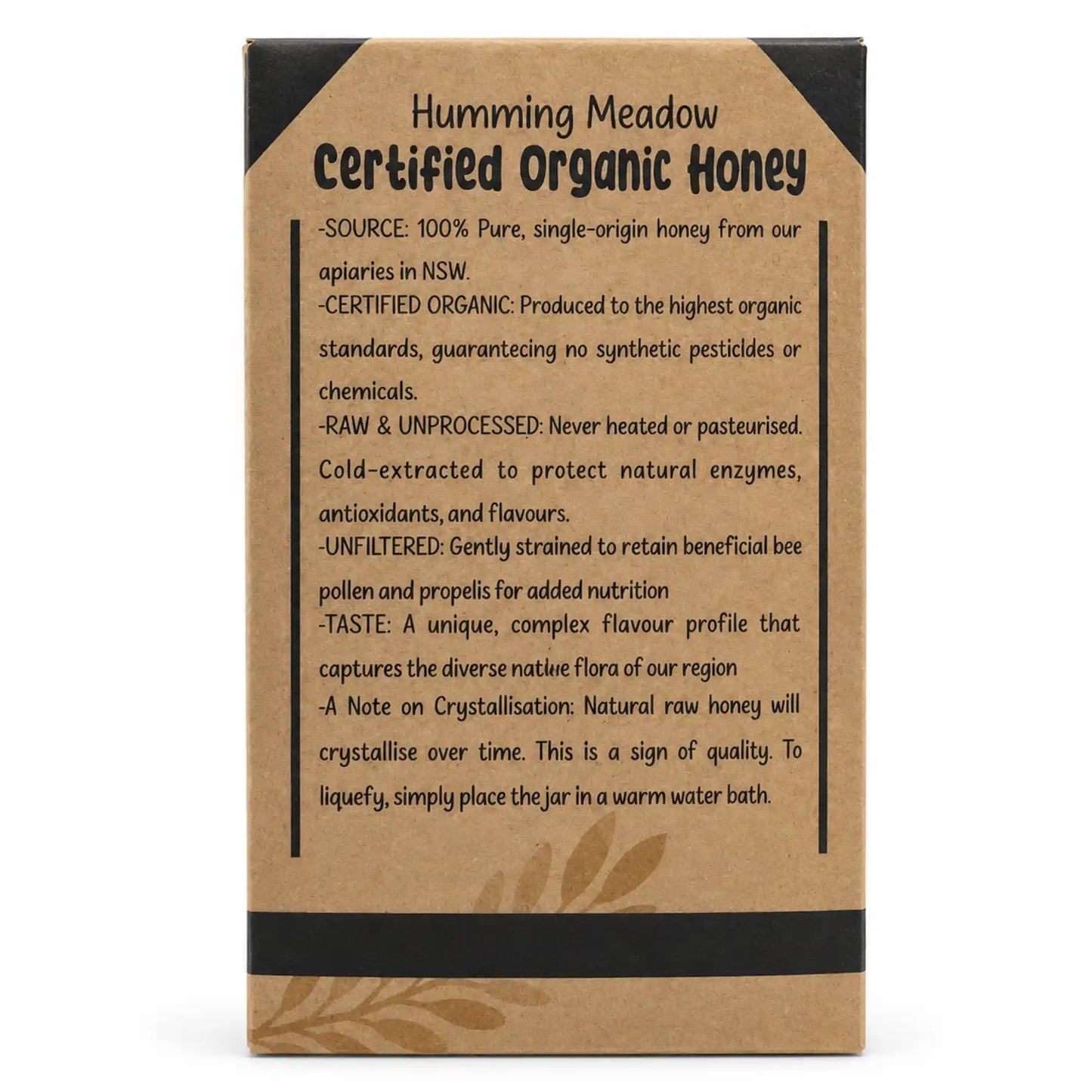
Raw honey may crystallise over time, a natural process and a sign of quality rather than a defect. To restore smooth, pourable consistency, set the jar in warm water for a few minutes. Don't microwave it, heat destroys what makes raw honey worth buying.
The Right Size to Try or Give
500 grams is a considered size, enough to enjoy for a few weeks while exploring how it tastes. It's a good gift too, a jar of rare ACO certified organic Bloodwood honey is a thoughtful, distinctly Australian gift most people haven't encountered before.
Specifications
Honey variety: Bloodwood, monofloral, from native Red Bloodwood trees (Corymbia gummifera)
- Certification: ACO Certified Organic (Certification Number: 10360)
- Processing: Raw and unfiltered
- Origin: Small batch Australian production
- Weight: 500g
- Volume: 375ml jar
- Colour: Deep amber
- Flavour profile: Golden syrup, toasted caramel, subtle woody finish
- Crystallisation: May occur naturally, warm gently to restore
What is Bloodwood honey and why is it rare?
Bloodwood honey is a monofloral honey from native Australian Red Bloodwood trees (Corymbia gummifera). It's genuinely rare because these trees flower only every two to four years, limiting how much honey exists, making it small batch by necessity, not choice.
What does ACO Certified Organic mean for this honey?
ACO (Australian Certified Organic) is the most recognised organic standard in Australia. It means hives sit away from conventional agriculture and chemical use, no prohibited treatments are used, and there's a full audit trail, third party verified, not a self applied label. This product is certified under ACO Certification Number: 10360.
What does raw and unfiltered honey mean?
It comes straight out of the extractor into the jar without heat treatment or fine filtering. Unlike commercial honey heated and filtered for shelf life and handling, this retains natural enzymes, pollen traces and subtle flavour complexity.
What does Bloodwood honey taste like?
Dark amber in colour with a deep, layered flavour. It opens with golden syrup and settles into a rich, toasted caramel taste that's neither cloying nor harsh, with a subtle woody, slightly smoky finish unique to this variety.
Why has my honey crystallised and is it still good?
Yes, crystallisation is natural and a sign of quality in raw honey. Place the jar in warm water for a few minutes to restore smooth consistency. Don't microwave it, heat destroys the natural enzymes and properties that make raw honey valuable.
How should I use or pair Bloodwood honey?
It pairs beautifully with strong cheeses, sourdough, porridge and Greek yoghurt, anything that benefits from a deep, distinctive sweetness. It also works well in cooking and baking where honey should contribute to the flavour rather than just sweetness.
How is this different from supermarket honey?
Most supermarket honey is blended, heated and fine filtered for uniformity and shelf life, removing flavour complexity, enzymes and pollen traces. This honey is monofloral, raw, unfiltered and small batch, carrying the unique character of Red Bloodwood nectar.
Is this honey suitable as a gift?
Absolutely. A 500g jar of rare ACO certified organic Bloodwood honey is a thoughtful, distinctly Australian gift. Most people have never encountered it before, making it memorable for food lovers and anyone who appreciates artisan Australian produce.
Where in Australia is this honey produced?
From hives positioned near stands of native Red Bloodwood trees in coastal and subcoastal eastern Australia. Beekeepers must be ready when the trees flower, which happens only every two to four years, making each batch reflect that season.
How should I store my organic honey?
Store in a cool, dry place away from direct sunlight. No need to refrigerate. Keep the lid tightly closed to prevent moisture getting in. Properly stored, raw honey has an exceptionally long shelf life due to natural antibacterial properties.
What is the ACO Certification Number for this honey?
This product is certified organic under ACO Certification Number: 10360.