Beekeeping Gear
Insulated Beehive Lid with Ventilation - Assembled
Insulated Beehive Lid with Ventilation - Assembled
Couldn't load pickup availability
One lid that handles both the heatwave and the cold snap
Ask any Australian beekeeper what their bees spend the most energy on and the answer is usually temperature. In summer, thousands of workers stand at the entrance fanning to push hot air out of the hive. In winter, the colony clusters and burns through stores to stay warm, while the moisture they generate condenses on a cold lid and drips back down onto the bees. Wet bees in winter are one of the quieter ways colonies fail. A basic flat lid does very little about any of this.
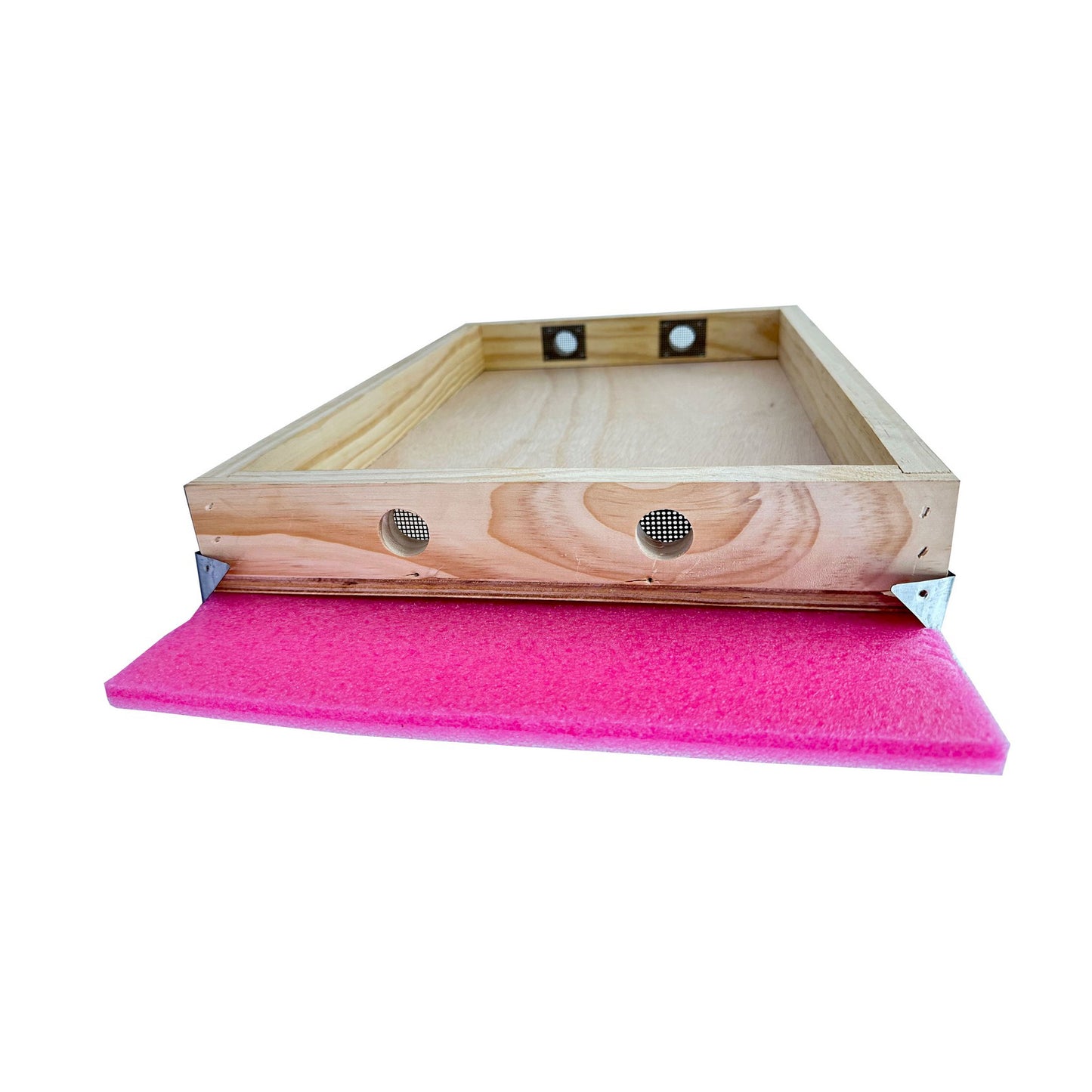
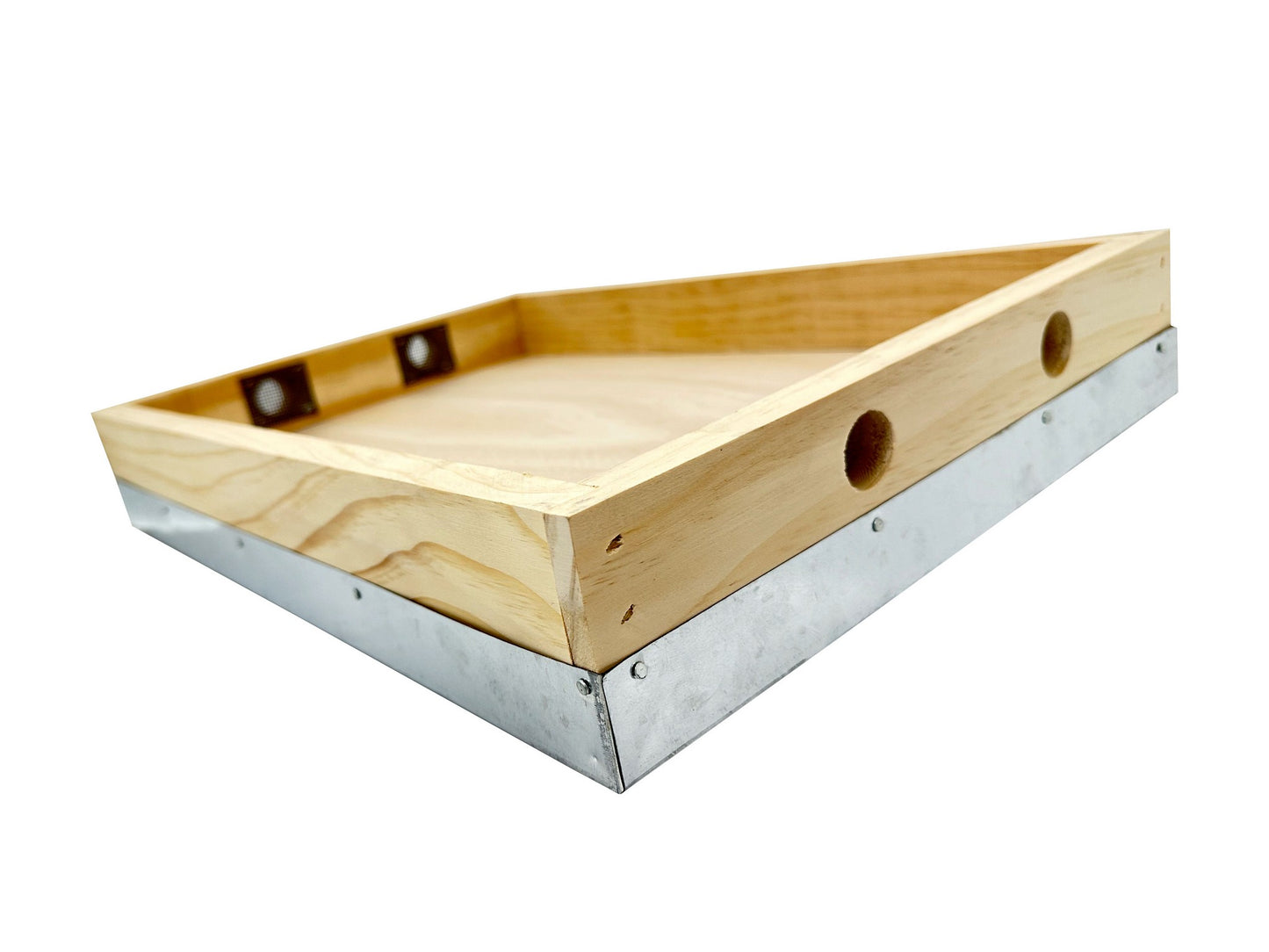
This insulated lid is built to do the job properly. It combines a galvanised steel top, a high-density insulation core, and mesh-screened ventilation holes in one pre-assembled unit. It arrives ready to sit straight on your hive, no tools needed, in your choice of 8-frame or 10-frame size.
Insulation that works in both directions
The high-density insulation sheet under the steel top slows heat transfer both ways. In summer it reflects heat away before it can radiate down into the brood nest. In winter, it helps retain the colony's warmth. Either way, the result is the same. Bees that spend less energy fanning or clustering have more energy for foraging and raising brood, and that shows up in the honey supers.
Ventilation without invitation
Insulation alone can trap moisture, which is why this lid pairs it with ventilation holes covered in fine mesh. Warm, humid air escapes before it can condense into the damp conditions that lead to mould and chalkbrood, while the mesh keeps out pests, debris, and rain. The combination matters more than either feature on its own. A sealed insulated lid sweats. A ventilated uninsulated lid leaks heat. This one does neither.
A galvanised top that shrugs off the weather
The outer shell is galvanised steel, so it resists rust and corrosion through rain, UV, and coastal air. It is also deliberately weighty. A lid that blows off in a storm undoes everything else, so this one is heavy enough to stay put in the wind while still being easy to lift for inspections.
Pre-assembled and sized to your hive
The lid ships fully assembled in standard Langstroth 8-frame and 10-frame widths, so check your box size before ordering. It pairs well with an inner cover underneath, which gives the bees a proper ceiling and stops them building comb up into the lid cavity.
Specifications
- Top layer: Galvanised steel, rust and corrosion resistant
- Core: High-density insulation sheet
- Ventilation: Mesh-screened ventilation holes
- Sizes: 8-frame and 10-frame Langstroth
- Assembly: Arrives fully assembled, no tools required
- Weight: Heavyweight design to resist wind
How do I know whether I need the 8-frame or 10-frame size?
Match the lid to the width of your boxes, not the number of hives you run. If you are unsure, measure the outside width of your brood box or count the frames it holds. An 8-frame box typically holds 8 frames and a 10-frame box holds 10. The lid needs to sit flush over the box edges to seal properly, so it is worth checking before ordering rather than guessing.
Does the lid need painting or any maintenance?
No. The top is galvanised steel, which is naturally resistant to rust and corrosion, so there is nothing to paint and nothing to reapply. An occasional visual check that the mesh over the vents is clear of debris is all it needs.
Will bees, ants, or hive beetles get in through the ventilation holes?
The ventilation holes are covered with fine mesh on the inside, so air moves through but pests, debris, and rain do not. Bees cannot exit through the vents either, so the lid does not create a second entrance for the colony to defend.
Do I still need an inner cover under this lid?
It is strongly recommended. An inner cover gives the bees a flat ceiling and stops them building burr comb up into the lid cavity, which makes inspections cleaner and keeps the insulation and vents doing their job. The two are designed to work together.
Is insulation really worth it in a warm climate?
Yes, and arguably more so. Insulation slows heat moving in both directions, so in a hot Australian summer it reduces the amount of radiant heat pushing down into the brood nest from the lid. Fewer bees tied up fanning at the entrance means more bees out foraging, which is where your honey crop comes from.
Is there any assembly involved?
None. The lid arrives fully assembled with the insulation and mesh already fitted. Lift it out of the packaging and place it on the hive.