Beekeeping Gear
Honey Pump & Filter - 1000kg/h 100 Mesh Filtration
Honey Pump & Filter - 1000kg/h 100 Mesh Filtration
Couldn't load pickup availability
Move and filter your honey in one pass
Filtering honey the old way is a waiting game. You drain the extractor into a bucket, pour it through a sieve, then stand around while gravity does the work at its own pace. On a warm afternoon it moves along. On a cool morning, or with a thicker honey, a full sieve can sit there barely dripping. Multiply that across a proper harvest and filtering quietly becomes the slowest part of the whole job.
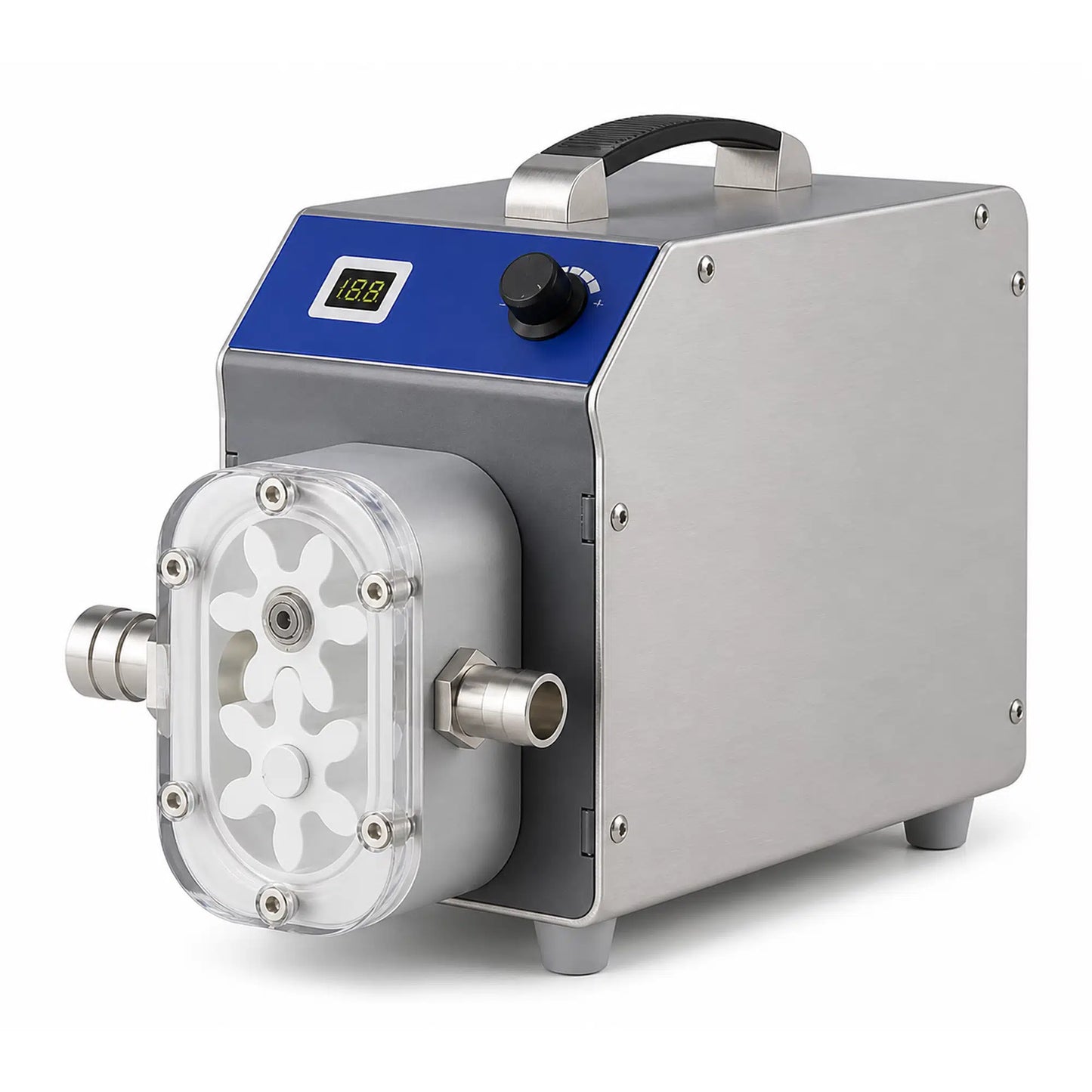
The Honey Pump & Filter takes over both steps at once. It moves honey at up to 1000 kilograms per hour and pushes it through a 100 mesh filter on the way, so what comes out the other end is clean and ready for settling or bottling. It connects into your existing setup with two 2 inch BS hose fittings.
Pumping and filtering in a single pass
Most setups treat pumping and filtering as separate jobs, which means separate equipment, separate cleaning, and an extra transfer where honey gets exposed and spilled. This unit combines them. Honey is drawn in through one fitting, passes through the 100 mesh filter inside, and comes out the other side ready for the settling tank or bucket. The filter slides in and out without tools, so cleaning between batches takes minutes rather than being a chore you put off.
A 100 mesh screen sits in a useful middle ground. It catches wax flecks, cappings debris and the odd bee part, but it is coarse enough to let most pollen through. You are cleaning the honey, not stripping the character out of it.
Capacity that keeps up with harvest day
At full speed the pump shifts up to 1000 kilograms, or roughly 700 litres, per hour. To put that in perspective, a full box of frames might give you 20 to 25 kilograms of honey, so this unit can move an entire day of extraction in well under an hour. The rotor turns at a modest 180 RPM, which keeps the flow steady and gentle rather than whipping air into the honey, and that matters when you want it to settle clear in the tank afterwards.
Speed control for the honey in front of you
Honey does not always cooperate. A thin, warm honey flows one way and a cold, thick one flows another, and running a pump flat out into a filter that cannot keep up is how you end up with a mess. The control knob lets you dial the speed to match the conditions. Slow it down for dense or cool honey, open it up when everything is warm and moving freely.
Runs on mains power or 12 volts
The pump accepts 110 to 230 volt mains power, and it also runs on 12 volts. That second option is worth more than it sounds. If you extract at an out-apiary, a shed without power, or off the back of a ute, you can run this from a vehicle battery and pump straight into drums on site instead of carting heavy supers home first.
Who it suits, and who it does not
If you keep two or three hives and harvest a few buckets a season, a sieve and a bit of patience will serve you fine and this machine will spend most of the year on a shelf. Where it earns its keep is anywhere honey is moved in volume. Sideline and commercial beekeepers, clubs that share extraction gear, and anyone regularly transferring honey between extractors, settling tanks and drums will feel the difference on the first harvest. The body is a heavy-duty plastic that keeps the weight down at 360 x 200 x 150mm, so one person can carry it, set it up and pack it away.
Specifications:
- Pumping capacity: up to 1000 kg/h (approx. 700 L/h)
- Rotation speed: 180 RPM
- Filter: 100 mesh, easy to install and remove
- Fittings: 2 x 2 inch BS hose connections
- Voltage: 110-230V mains or 12V
- Speed: adjustable via control knob
- Product size: 360 x 200 x 150mm
- Construction: heavy-duty plastic body
Does it pump and filter in one pass, or do I still need a separate sieve?
One pass. Honey is drawn in through one fitting, runs through the 100 mesh filter inside the unit, and comes out the other side clean and ready for the settling tank or bucket. That removes the separate step where you pour honey through a sieve and wait on gravity, and it removes an extra transfer where honey gets exposed and spilled.
What does the 100 mesh filter catch, and will it strip the pollen out?
A 100 mesh screen sits in a useful middle ground. It catches wax flecks, cappings debris and the odd bee part, but it is coarse enough to let most pollen through. You are cleaning the honey, not stripping the character out of it. If you want a finer polish later you can filter again separately, but for honey heading from the extractor to a settling tank, 100 mesh is a sensible choice.
How fast is it in real terms?
At full speed it moves up to 1000 kilograms an hour, which is roughly 700 litres. To put that in context, a full box of frames gives you around 20 to 25 kilograms, so the pump can shift an entire day of extraction in well under an hour. The rotor turns at a modest 180 RPM, so the flow stays steady rather than violent.
Can I run it away from mains power?
Yes. It takes 110 to 230 volt mains power and it also runs on 12 volts. That means you can power it from a vehicle battery at an out-apiary, a shed without power, or off the back of a ute, and pump straight into drums on site instead of carting heavy supers home first.
Is it worth buying if I only have a few hives?
Probably not, and it is fair to be upfront about that. If you keep two or three hives and harvest a few buckets a season, a sieve and a bit of patience will do the job, and this pump will spend most of the year on a shelf. It earns its keep where honey is moved in volume, so sideline and commercial beekeepers, and clubs that share extraction gear, are the buyers who feel the difference on the first harvest.
How hard is it to clean between batches?
The filter slides in and out without tools, so cleaning takes a few minutes rather than being a job you put off. Because pumping and filtering happen in the one unit, there is also less separate equipment to wash down afterwards.
Will it connect to my extractor and tank?
It uses two 2 inch BS hose fittings, one for honey in and one for honey out, so it sits in line between your extractor and your settling tank or drum. Check that your existing hoses match the 2 inch BS fitting before harvest day, or grab a matching hose so you are not improvising mid-pour.
Will pumping damage the honey or whip air into it?
The rotor turns at a gentle 180 RPM, which keeps the flow steady rather than whipping air through the honey. That matters because aerated honey takes longer to settle clear in the tank. Run it at a sensible speed for the honey in front of you and it stays clean.
Can I adjust the speed for thick or cold honey?
Yes. A control knob lets you dial the speed up or down. Slow it for dense or cool honey so the filter can keep up, and open it up when everything is warm and flowing freely. Running a pump flat out into a filter that cannot keep pace is how you end up with a mess, so the adjustment is there to prevent exactly that.
How big and heavy is it to move around?
The body is a heavy-duty plastic that keeps the weight down, and it measures 360 x 200 x 150mm, so one person can carry it, set it up and pack it away. That portability is part of what makes the 12 volt off-grid use practical.