Beekeeping Gear
HiveGate Entrance Guard - Robber Bee & Wasp Protection
HiveGate Entrance Guard - Robber Bee & Wasp Protection
Couldn't load pickup availability
An Internal Hive Entrance That Lets the Bees Do the Guarding
Robbing usually starts quietly: a few wasps loitering on the landing board in late summer, a nuc with far more traffic than a small colony should have, bees wrestling at the entrance instead of walking in. By the time it is obvious, a weak or queenless hive can be stripped out in a day or two. Entrance reducers help, but they slow your own foragers down at exactly the time of year you want them moving freely.
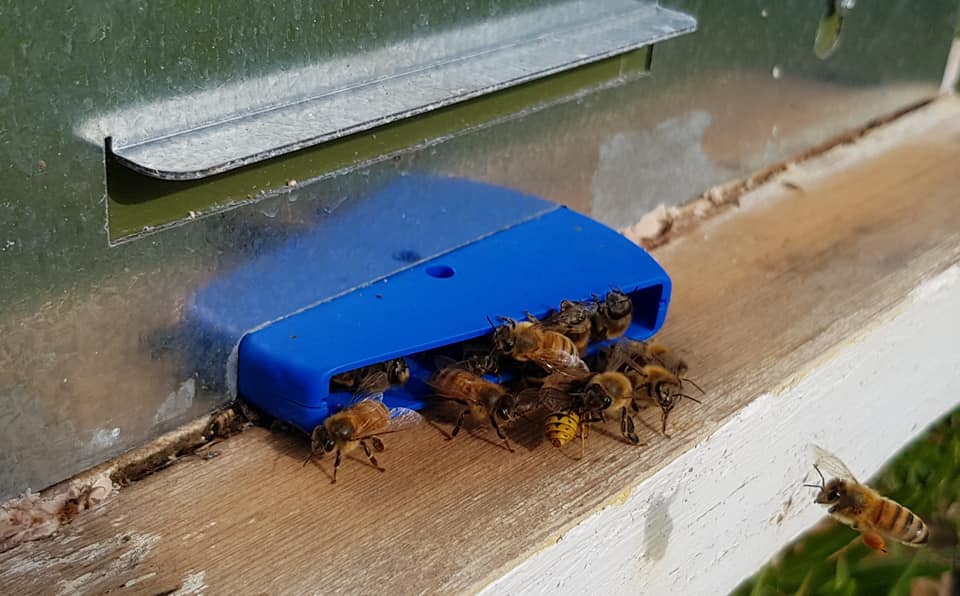
HiveGate takes a different approach. It is a 27cm long, 7cm wide plastic tube, made in New Zealand, that sits on the bottom board and extends the entrance from the front of the hive to a point directly under the brood cluster. Your bees walk through it and come out in the middle of the colony. Anything else that walks through it comes out there too, which is the whole point.
Why an Internal Entrance Works
Guard bees at a normal entrance are a thin line across the landing board, and a wasp or robber bee that slips past has the whole bottom board to wander. With HiveGate, an intruder leaves the tube straight into the densest part of the hive. It gets mobbed, alarm pheromone goes up, and the colony deals with it in the dark where the bees hold every advantage. Intruders also struggle to find their way back out through a tube, so most never get to fly home and recruit more. Small and weak colonies gain the most.
Your Bees Still Come and Go Freely
Unlike a narrowed entrance, the tube does not restrict traffic. Foragers walk through at a normal pace and drop their nectar and pollen loads right where the brood nest needs them. The colony adopts the new entrance quickly, so there is no settling-in period to manage.
A Steadier Climate Inside the Hive
The tube also changes how air moves into the hive, and the developer noticed on camera that bees appear to use it to regulate temperature and humidity around the brood more precisely. Less energy spent fanning in a hot summer or clustering through a cold winter goes into brood and honey instead, and fewer intruders means fewer pathogens arriving with them.
Fitting It
HiveGate lies flat on the bottom board of a standard Langstroth 8 or 10 frame hive and fits nucleus boxes too. The rest of the entrance must be closed off so the tube is the only way in, using a modified wooden entrance reducer or an adapter plate. Position the inner end under where the cluster sits, usually the centre of the brood box. It stays in year-round, and the UV-stable plastic is built for a long outdoor life. One per hive is standard.
What It Will Not Do
It is not a small hive beetle trap and does not replace a wax-dipped mesh bottom board for beetle control or varroa monitoring. It will not rescue a colony that is already queenless and down to a handful of bees. HiveGate tips the odds in the colony's favour but does not create defenders, so combine a hive that far gone with a stronger colony first.
Specifications
- Length: 27cm
- Width: 7cm
- Material: durable UV-stable plastic, chemical-free
- Origin: made in New Zealand, developed by Bee-IQ Solutions
- Fits: standard Langstroth 8-frame and 10-frame hives and nucleus boxes
- Installation: sits on top of the bottom board, remaining entrance closed off with an entrance reducer or adapter plate
- Maintenance: set and forget, no ongoing adjustment
- Quantity: one per hive
How does HiveGate stop robber bees and wasps?
It extends the entrance to a point under the brood cluster, so intruders exit the tube into the densest part of the hive, where they get mobbed.
Will it slow my own bees down?
No. Unlike a narrowed entrance, the tube does not restrict traffic, and foragers walk through at a normal pace.
What hives does it fit?
Standard Langstroth 8-frame and 10-frame hives, and nucleus boxes. It lies flat on the bottom board.
How big is it?
The tube is 27cm long and 7cm wide.
Do I need more than one for a 10-frame hive?
No. One per hive is standard, including for a 10-frame box.
How do I install it?
Lay it on the bottom board with the inner end under the cluster, then close off the rest of the entrance so the tube is the only way in.
What do I use to close off the rest of the entrance?
A modified wooden entrance reducer or an adapter plate. The tube needs to be the only way in.
Does it work as a small hive beetle trap?
No. It does not replace a wax-dipped mesh bottom board for beetle control or varroa monitoring.
Can it save a queenless colony?
Not one already down to a handful of bees. It tips the odds in the colony's favour but does not create defenders, so combine it with a stronger colony first.
Can I leave it in all year?
Yes. It is set and forget, and the UV-stable plastic is built for a long service life outdoors.