Beekeeping Gear
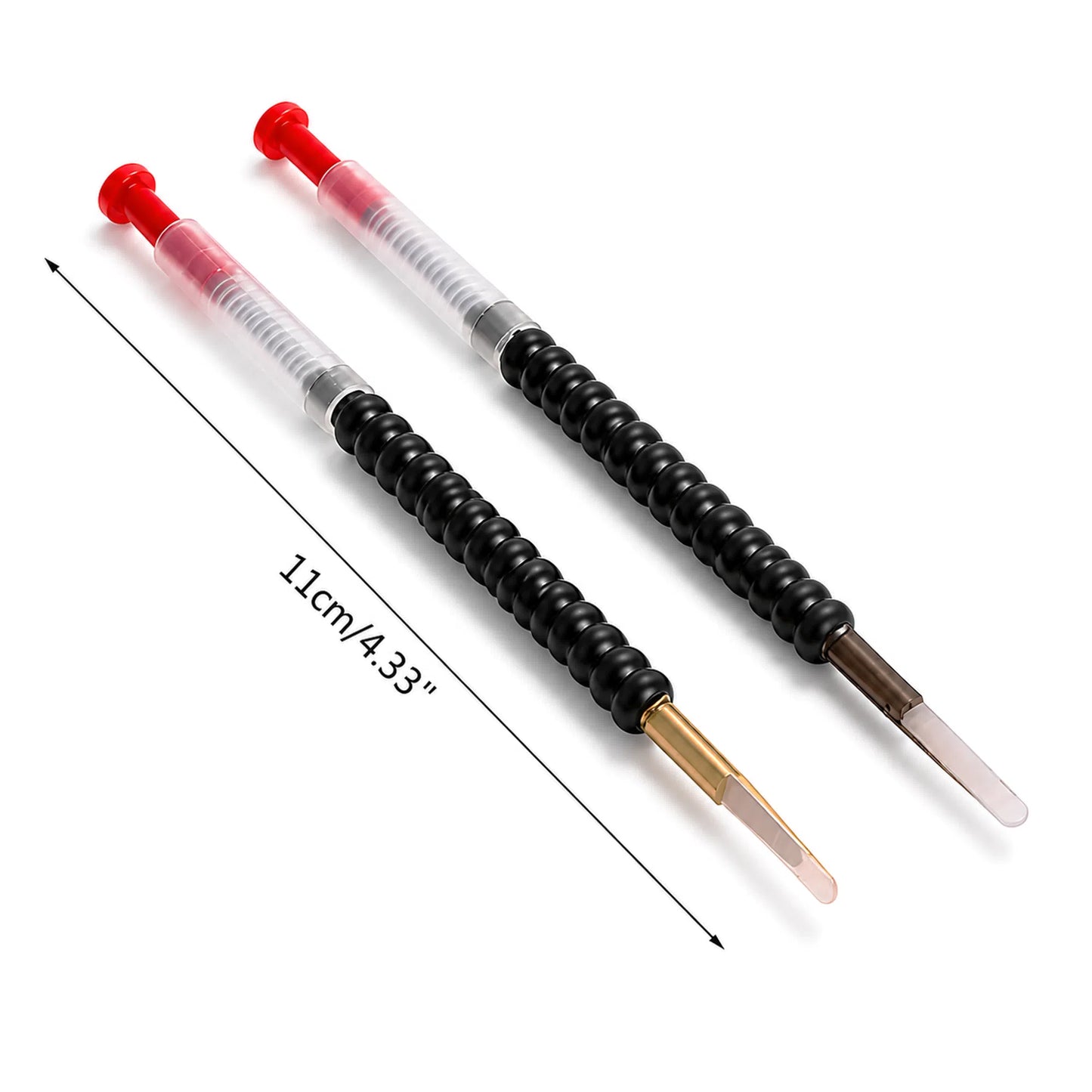
Chinese Grafting Tool - The Queen Rearer’s Pick
Chinese Grafting Tool - The Queen Rearer’s Pick
Couldn't load pickup availability
Spring-Loaded Precision for Delicate Larvae Transfer
Queen rearing rewards precision and patience. At its heart is one delicate moment, transferring a 24-hour-old larva from its worker cell into a queen cell cup. Get it wrong, even a slight injury, and the colony rejects it. That's why the Grafting Tool is the most popular grafting tool in the world. Its spring-loaded design lifts a larva with a film of royal jelly and places it into the cell cup without touching, squeezing, or damaging it.
Why This Design Leads the World
This grafting tool design became popular decades ago as a faster, gentler alternative to metal grafting needles. Original tools used split bamboo or bone, modern versions use flexible plastic or composite. It's now the standard tool taught in queen-rearing courses worldwide, including at the University of Sussex and University of Florida.
How the Spring-Loaded Mechanism Works
The flexible tongue tip slides under the larva, scooping it up with its surrounding royal jelly. Pressing the spring-loaded plunger gently ejects the larva, jelly intact, into the new cell cup. Nothing squeezes or pinches it. Because it lands centred with its royal jelly cushion, nurse bees accept it as if laid there naturally.
Why Choose This Tool Over Metal Needles?
- Higher acceptance rates: less larval injury means better take-up
- Easier learning curve: forgiving for beginners from session one
- Royal jelly stays intact, unlike metal needles
- Faster: 40 to 60 larvae/hour vs 25 to 40 with metal needles
- Half the cost of premium metal tools
- Less wrist fatigue over long sessions
How to Use It
Select 12 to 24 hour-old larvae (smaller than a poppy seed). Hold the tool at a shallow angle, slide the tongue under the larva, lift gently, then position over the queen cell cup and press the plunger to release. With practice, the whole transfer takes under 10 seconds per larva, fast enough to graft a full bar of 20 to 40 cells in one session.
Acceptance Rates and Care
Used properly, acceptance rates run 70 to 90 percent, versus 30 to 50 percent with harsher tools. Success also depends on warm conditions, working quickly, priming cell cups with royal jelly, and a queen-less, well-fed starter colony. After use, rinse with warm water only, never harsh chemicals or boiling water, dry with a soft cloth, and store flat. Many rearers keep 2 to 3 spares on hand.
Beginner Friendly
The forgiving tongue means mistakes early on won't ruin larvae. Most beginners get usable queens within 2 to 3 sessions, with consistent results by their first season, far faster than the full season metal needles typically demand.
What Else You'll Need
Plastic queen cell cups, cell bar holders, a queen marker, an isolation cage, a magnifying lens, good lighting, and a queen-rearing reference book (Connor or Bush are solid picks).
Specifications
- Type: Spring-loaded grafting tool
- Tip: Flexible tongue
- Use: Transferring 12 to 24-hour-old larvae into queen cell cups
- Compatibility: JZBZ, NICOT, plastic cell cup systems
- Cleaning: Warm water rinse only, no harsh chemicals
- Skill level: Beginner-friendly
What is a grafting tool used for?
It transfers 12 to 24 hour old larvae from worker cells into queen cell cups without touching or injuring them, a key step in raising your own queen bees.
Where did this grafting tool design come from?
The design originated as a gentler alternative to metal needles. It is now the standard tool taught in queen rearing courses worldwide.
How does the spring-loaded mechanism work?
A flexible tongue tip slides under the larva and scoops it up with its royal jelly. Pressing the plunger gently ejects the larva into the queen cell cup, unharmed.
Is it better than a metal grafting needle?
Yes, for most users. It offers higher acceptance rates, an easier learning curve, faster grafting speed, and lower cost, with less risk of injuring the larva.
What acceptance rate can I expect?
Used properly, acceptance rates typically run 70 to 90 percent, compared to 30 to 50 percent with harsher grafting methods or poorly executed transfers.
Is this tool suitable for beginners?
Yes, it is the most beginner-friendly grafting tool available. Most new queen rearers get usable results within their first 2 to 3 grafting sessions.
How do I clean and care for the tool?
Rinse with warm water only after each use. Avoid harsh chemicals or boiling water, dry with a soft cloth, and store flat to protect the flexible tongue tip.
What age larvae should I graft?
Use larvae between 12 and 24 hours old, roughly the size of a poppy seed. This age range gives the highest chance of successful queen conversion.
What other equipment do I need for queen rearing?
You will also want plastic queen cell cups, cell bar holders, a queen marker, an isolation cage, good lighting, and ideally a magnifying lens for spotting larvae.
Does the tool work with any cell cup system?
Yes, it is compatible with standard queen cell cup systems including JZBZ, NICOT, and other plastic cell cups used in queen rearing setups.