Beekeeping Gear
Wooden Queen Cages | Traditional Bee Favourite
Wooden Queen Cages | Traditional Bee Favourite
Couldn't load pickup availability
Natural Wood, Wire Mesh, Proven for Generations
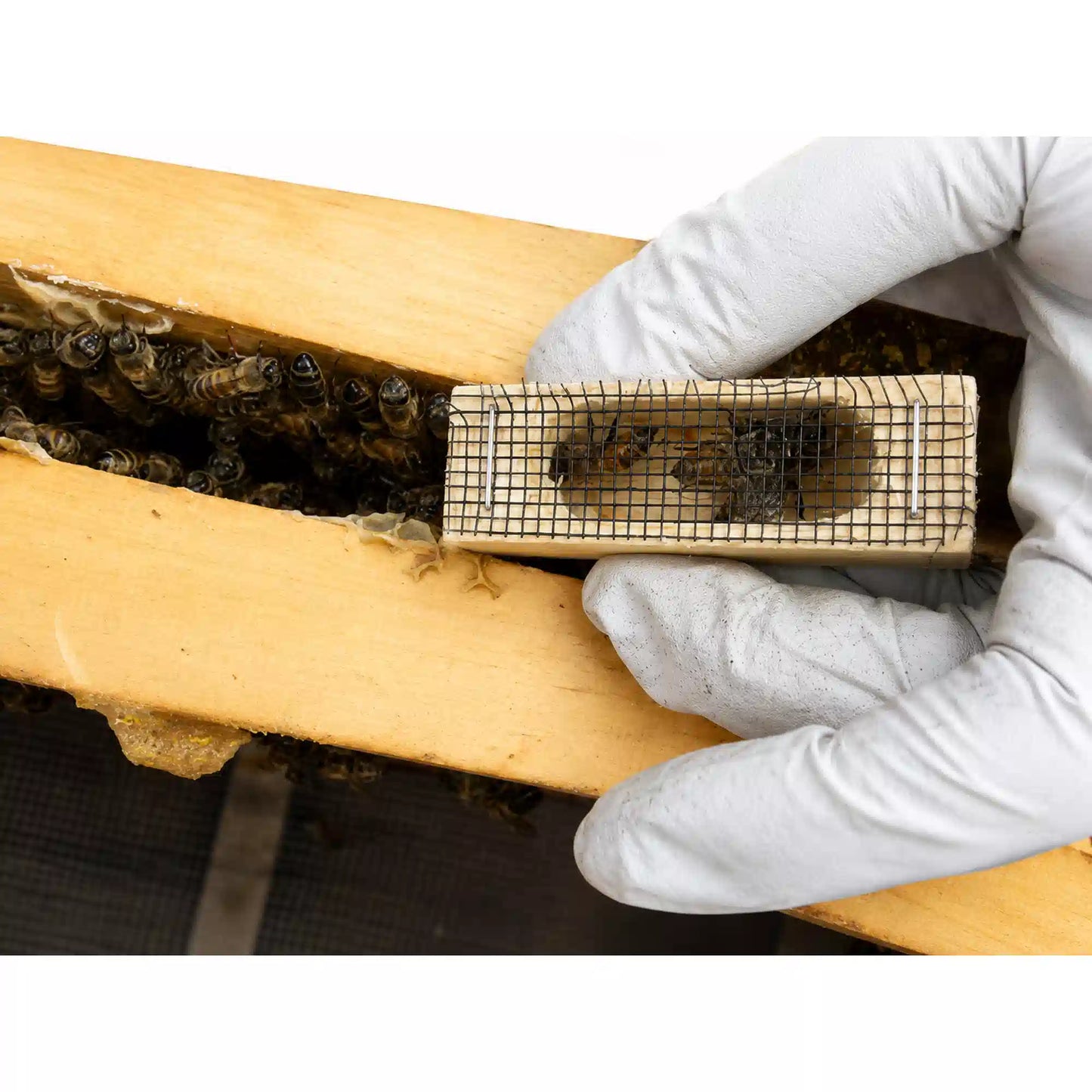
Long before plastic existed, beekeepers introduced new queens using simple wooden cages with wire mesh covers. Over a century of experience has shown bees genuinely respond well to natural materials, the warmth of timber and a design refined since the 1800s work in harmony with how bees behave inside a hive. Our Wooden Queen Cages carry on that tradition with modern manufacturing precision.
Crafted from durable natural wood with a fine wire mesh cover, each cage holds your queen safely while the colony learns to accept her through the mesh. It wedges securely between brood frames and sits in the hive for the typical 3 to 7 day introduction period. Available in 1-pack (2 cages) or 5-pack (10 cages).
Why Do Beekeepers Still Choose Wood?
- Bees prefer natural materials, treating wooden cages as part of the comb and accepting them faster
- Better candy plug retention, the porous surface holds the plug securely, unlike smooth plastic
- Easier to wedge, wood grips the comb better and stays in place during inspections
- Traditional appearance, preferred by teaching apiaries and workshops
How Do Queen Cages Save Your Queen?
Introducing a queen directly is dangerous, workers can detect she's a stranger and may ball, sting, or kill her within minutes. The cage protects her physically while pheromones pass through the mesh, letting workers learn her scent. Attendant bees feed her, and the candy plug releases her exactly when the colony is ready, giving 90%+ acceptance rates versus under 50% for direct release.
When Do I Need These Cages?
Common uses include buying and introducing new queens, re-queening, splits, queen banking, brood breaks for IPM (around 21 days for varroa treatment), and safe confinement during hive inspections or emergencies.
Wooden vs Plastic: Which Should I Choose?
Choose wooden if you prefer natural materials, teach workshops, want the traditional look, or do candy-plug releases (wood holds candy better) at the lowest cost. Choose plastic for easier cleaning between colonies, bright visibility, and fully hygienic reuse. Many beekeepers stock both.
How to Use a Wooden Queen Cage
Ensure the colony is queenless for at least 24 hours. Place the queen with 2 to 3 attendants and a candy plug in the cage, wedge it between two brood frames with mesh facing outward, then leave the hive undisturbed for at least 3 days. Workers eat through the candy over 3 to 7 days, releasing her naturally. Inspect 7 to 10 days later to confirm laying.
How Do Candy Plugs Work?
The candy plug is a soft sugar paste workers recognise as food. As they slowly chew through it, they accept her scent at their own pace, self-timing the release for optimal acceptance, far more reliable than manual release.
Can I Reuse a Wooden Queen Cage?
Yes. Scrape off wax and propolis, brush away debris, and air dry completely. Never submerge in water, as wood can swell and warp. With care, a cage typically lasts 3 to 5 introductions.
Specifications
- Type: Wooden queen introduction and transport cage
- Material: Natural wood with wire mesh cover
- Pack sizes: 1 Pack (2 cages) or 5 Pack (10 cages)
- Reusable: Typically 3 to 5 introductions per cage
- Cleaning: Dry scraping and brushing only, no water submersion
Why choose a wooden queen cage over plastic?
Bees accept wood faster since it feels like natural comb material. Wood also holds candy plugs more securely and grips brood frames better when wedged in place.
How long does the queen stay in the wooden cage?
Typically 3 to 7 days. Workers slowly eat through the candy plug at their own pace, releasing the queen once the colony has accepted her scent.
What acceptance rate can I expect?
Properly introduced queens using a candy plug cage achieve over 90 percent acceptance rates, compared to under 50 percent with direct release.
Can wooden queen cages be reused?
Yes, typically for 3 to 5 introductions with proper care. Scrape off wax and propolis, brush away debris, and air dry fully before reuse.
Can I wash a wooden queen cage with water?
No, avoid submerging it in water. Wood can swell and warp, and mesh staples may loosen. Dry scraping and brushing is the recommended cleaning method.
How do I introduce a new queen using this cage?
Ensure the colony is queenless for 24 hours, place the queen with attendants and a candy plug in the cage, then wedge it between two brood frames.
What else can wooden queen cages be used for?
Besides introductions, they're used for re-queening, splits, queen banking, brood breaks during varroa treatment, and safe confinement during inspections.
How do candy plugs control queen release timing?
Workers chew through the candy plug at their own pace. Hostile colonies chew slowly, receptive colonies chew quickly, so release timing matches acceptance.
Should I buy the 1-pack or 5-pack?
The 1-pack suits hobbyists doing occasional re-queening. The 5-pack suits sideliners and breeders managing regular introductions across a season.
Is a wooden cage better for beginners than plastic?
Both work well for beginners. Wood suits candy-plug releases and natural-material preferences, while plastic offers easier cleaning between different colonies.